


Prinsjesdag 2026: the key changes

Index
Jump to
Highlights: what you need to know
1. Pseudo-final levy changes the business case for company cars
2. Transitional arrangement offers opportunities until 2031
3. Benefit in kind for electric cars is going up
4. Road tax advantage for electric cars remains for a few more years
5. More zero-emission zones on the way
6. Less admin for medium-sized employers
7. Possible ‘greentimer’ scheme for used EVs
About the author

On Prinsjesdag (the Dutch Budget Day), the government presented its tax plans for 2027. The new measures bring important changes, especially for employers with a company fleet. The biggest impact comes from the introduction of the new pseudo-final levy on non-electric cars. At the same time, electric vehicles remain attractive from a tax point of view, despite some advantages being phased out further.
For organisations thinking about the future of their mobility policy, now is the time to look ahead. Below, we’ve rounded up the key developments.
Highlights: what you need to know
- New pseudo-final levy of 12% for new petrol, diesel and hybrid lease cars from 2027
- Transitional arrangement until 1 January 2031 for cars provided before 1 January 2027
- Benefit in kind for new electric cars rises to 20% in 2027
- Road tax (MRB) discount for electric cars remains for now
- More zero-emission zones in Dutch municipalities
- Less admin thanks to a higher threshold for CO₂ reporting
- Possible incentive for used electric cars through a new ‘greentimer’ scheme
1. Pseudo-final levy changes the business case for company cars
The most far-reaching change is the introduction of the pseudo-final levy (pseudo-eindheffing) for new passenger cars that aren’t fully electric.
From 1 January 2027, as an employer you’ll pay an extra tax when you provide a petrol, diesel or hybrid car to an employee who also uses it privately. Commuting counts as private use too.
The levy is 12% of the car’s list price per year and comes on top of the existing tax rules.
A worked example
Say you provide a hybrid lease car with a list price of €45,000 in 2027.
The pseudo-final levy is then:
- 12% of €45,000
- = €5,400 per year
- = €450 per month
These costs are entirely for the employer and can’t be passed on to the employee.
For many organisations, this will have a significant impact on the Total Cost of Ownership (TCO) of the fleet.
2. Transitional arrangement offers opportunities until 2031
Luckily, there’s good news too for organisations that can’t go fully electric straight away.
A transitional arrangement applies to cars already provided to an employee before 1 January 2027. No pseudo-final levy has to be paid for these vehicles until 1 January 2031.
That makes the timing of replacements more important than ever.
Note that just signing a lease contract or placing an order isn’t enough. The car must actually have been provided to the employee before 1 January 2027.
For many businesses, this may be a reason to bring planned replacements forward in the coming months.
3. Benefit in kind for electric cars is going up
The tax treatment of electric lease cars is changing too.
In 2026, the following still applies:
- 18% benefit in kind on the first €30,000 of the list price
From 2027, this becomes:
- 20% benefit in kind
And from 2028:
- The standard benefit-in-kind rate of 22%
For employees, this means a slightly higher benefit in kind.
At the same time, a fully electric car remains exempt from the new pseudo-final levy. That actually makes electric driving more attractive from an employer’s perspective.
When you factor in all the costs, the advantage of electric driving over petrol, diesel and hybrid cars grows even further.
4. Road tax advantage for electric cars remains for a few more years
The tax advantages for electric cars are being phased out gradually, but won’t disappear straight away.
The discount on road tax (MRB) remains for now:
- 2027: 30% discount
- 2028: 30% discount
- 2029: 25% discount
- From 2030: no discount
Although the advantage is getting smaller, it remains an important factor in the total running costs of a vehicle for many organisations.
5. More zero-emission zones on the way
More and more municipalities are introducing zero-emission zones.
In 2027, new zones are expected in places including:
- Alphen aan den Rijn
- Venlo
From 2028, further expansions will follow, including:
- Almere
For business owners who regularly visit city centres or work in urban areas, it’s becoming increasingly important to think about how usable vehicles will be in future.
A commercial vehicle that’s perfectly fine today may have limited access to certain areas in a few years’ time.
6. Less admin for medium-sized employers
A positive change for many employers is the adjustment of the threshold for the CO₂ reporting obligation.
From 1 January 2027, this threshold will be raised from:
- 100 employees
- To 250 employees
As a result, the admin obligation no longer applies to a large number of medium-sized organisations.
That saves time, paperwork and reporting obligations.
7. Possible ‘greentimer’ scheme for used EVs
The government is also looking into a so-called ‘greentimer’ scheme.
The proposal aims to make used electric cars between five and eight years old more attractive through a lower benefit-in-kind rate of 14%.
The scheme is provisionally planned for 2028, but still needs to be worked out further before it’s finalised.
If these plans go ahead, they could give the market for second-hand electric lease cars a real boost.
What does this mean for your fleet?
Although 2027 might still seem a while off, a lot of decisions are being made right now. Lease contracts signed today often run for several years, so the moment a vehicle is replaced can make a difference of thousands of euros in the total costs.
For many organisations, these are the key questions:
- Which lease contracts end before 2027?
- Which cars will fall under the transitional arrangement?
- Is going fully electric feasible within the organisation?
- What impact does the pseudo-final levy have on the fleet budget?
- Is it wise to bring planned replacements forward?
By getting a clear picture of these developments now, you’ll avoid surprises once the new rules come into force.
Conclusion
Prinsjesdag 2026 marks a major turning point for business mobility. With the introduction of the pseudo-final levy, it’ll be considerably more expensive from 2027 to provide new petrol, diesel and hybrid cars to employees.
At the same time, electric driving remains attractive from a tax point of view, thanks to the exemption from this new levy and the temporary road tax discount. For organisations that can’t go fully electric yet, the transitional arrangement until 2031 offers extra time to plan the switch carefully.
If you want to keep a grip on mobility costs in the coming years, it’s wise to review your fleet now.
FAQs
What is the pseudo-final levy?
The pseudo-final levy is an extra employer tax of 12% of the list price for new non-electric passenger cars provided to employees for business and private use from 1 January 2027.
Does the pseudo-final levy also apply to hybrid cars?
Yes. The rules apply to petrol, diesel, LPG and hybrid cars. Only fully electric cars are exempt.
When does the transitional arrangement apply?
A transitional arrangement until 1 January 2031 applies to cars actually provided to an employee before 1 January 2027.
Is a signed lease contract enough for the transitional arrangement?
No. The car must actually have been provided to the employee before 1 January 2027.
Is the benefit in kind for electric cars going up?
Yes. The benefit-in-kind rate rises to 20% in 2027 and to 22% from 2028.
Will the road tax discount for electric cars remain?
Yes. In 2027 and 2028, there’s still a 30% discount on road tax (MRB). From 2029, it’ll be 25%, and from 2030 the discount ends.
What’s changing in the CO2 reporting obligation?
From 2027, the threshold moves from 100 to 250 employees. As a result, the obligation no longer applies to many medium-sized employers.
Why is this relevant for shortlease?
Shortlease offers flexibility in a market where laws and regulations change fast. Organisations can respond more easily to tax changes, zero-emission zones and changing mobility needs without taking on long-term commitments.
Need help?
Our team is happy to help. Send us a WhatsApp, give us a call or drop us an email, or find the answer straight away in our FAQs.

WhatsApp us
+31 6 29518248

Call us
+31 88 996 0100

Email us
A quick answer to your question

FAQs
Read the answers
Related articles
Compare our competitive deals
- Flexible from 1 month
- Personal service, sorted quickly
- Switch to electric with ease

Questions about short lease? Gideon is happy to help you get started!
We are happy to work with you to find a suitable short lease solution.
Brands
A selection of our brands
We supply all brands and all classes of passenger cars and commercial vehicles. Whether you are looking for a BMW, Audi, Tesla or Volvo.

Kia

Renault

Volkswagen

BMW

Skoda

Volvo
Categories
SUV


Hatchback

Estate

Van

Saloon

Minibus

SUV
Hatchback
Estate
Van
Saloon
Minibus
SUV
Hatchback
Estate
Van
Saloon
Minibus
Tips for going on holiday in your electric car
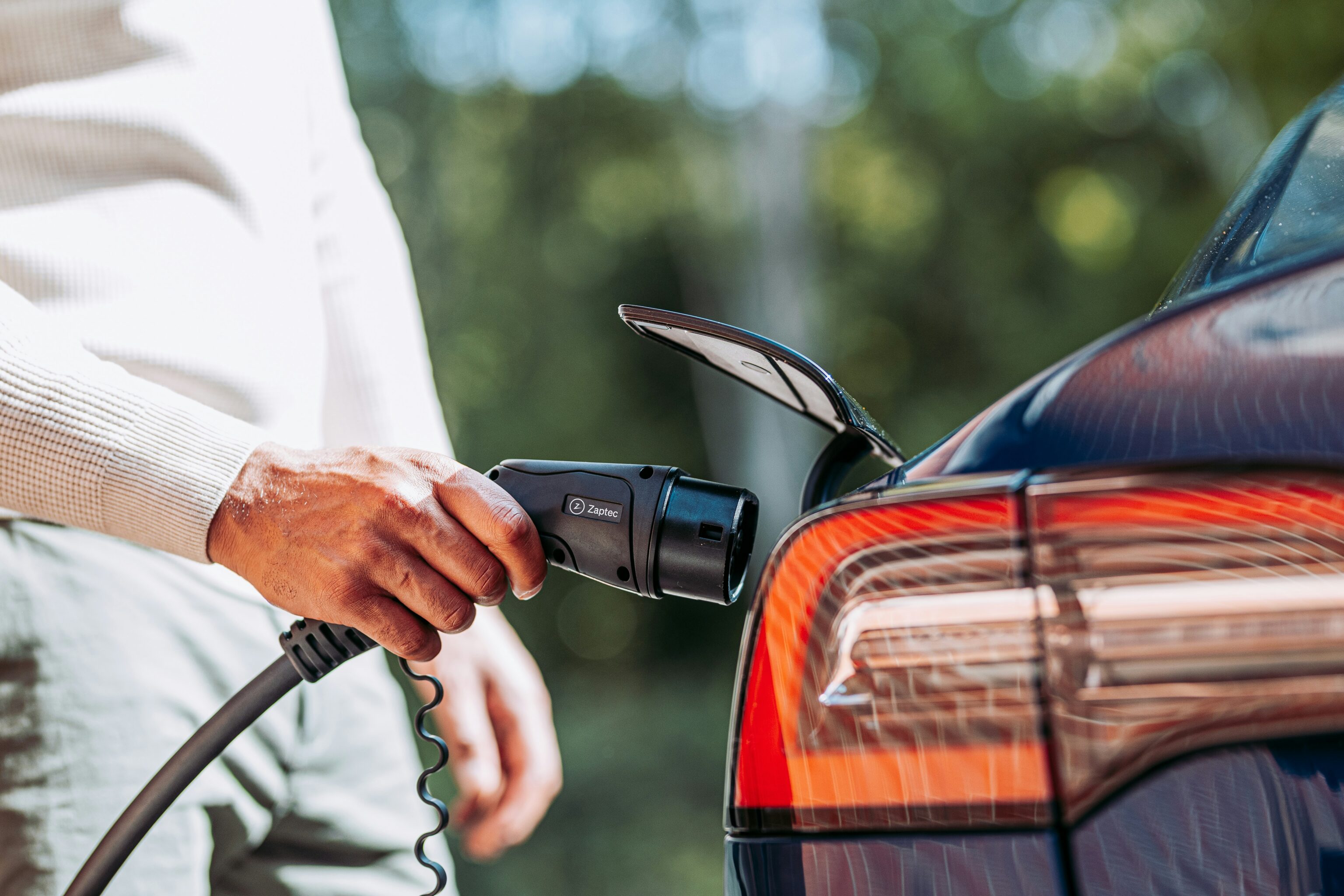
Going on holiday in your electric car? With these six tips, you’ll be well prepared, plan your charging stops cleverly and get the most out of your range.
1. Plan your route in advance
While you can fill up a petrol or diesel car pretty much anywhere, it’s less straightforward with electric cars. So it’s smart to plan your route in advance and check where the charging points are.
Use handy apps or sat navs that show charging points along the way. That way, you avoid surprises and know you can always charge when you need to.
2. Check charging cards and rates
Abroad, not all charging cards work the same way as in the Netherlands. So check whether your charging card works in the countries you’ll be travelling through.
Consider taking an extra charging card as a back-up. Rates can also vary between providers, so it’s worth looking into this beforehand.
3. Allow for charging time
Charging takes longer than filling up. Rapid charging is pretty quick these days, but you’re still stopped for longer than with a traditional fill-up.
So plan your charging stops cleverly – during a lunch break or coffee stop, for example. That way, you don’t lose extra time and your journey stays comfortable.
4. Think about your driving style
Your driving style has a big impact on your electric car’s consumption. By driving calmly and accelerating gradually, you’ll increase your range.
Use regenerative braking where possible and avoid unnecessarily high speeds. That makes your journey more efficient and means you’ll need to charge less often.
5. Watch your luggage and weight
The heavier the car, the higher the energy consumption. If you’re going on holiday with lots of luggage or a roof box, that can affect your range.
So try to pack smart and only take what you really need. That saves not just space, but also charging stops along the way.
6. Check the weather and your destination
Temperature affects your battery’s performance. In cold conditions, your range goes down. Mountainous areas also demand more from your battery.
Take this into account when planning your route and charging stops, so you don’t get any surprises.
Need help?
Our team is happy to help. Send us a WhatsApp, give us a call or drop us an email, or find the answer straight away in our FAQs.
WhatsApp us
+31 6 29518248
Call us
+31 88 996 0100
Email us
A quick answer to your question
FAQs
Read the answers
Related articles
Compare our competitive deals
- Flexible from 1 month
- Personal service, sorted quickly
- Switch to electric with ease
Questions about short lease? Gideon is happy to help you get started!
We are happy to work with you to find a suitable short lease solution.
Brands
A selection of our brands
We supply all brands and all classes of passenger cars and commercial vehicles. Whether you are looking for a BMW, Audi, Tesla or Volvo.
Kia
Renault
Volkswagen
BMW
Skoda
Volvo
Categories
SUV
Hatchback
Estate
Van
Saloon
Minibus
SUV
Hatchback
Estate
Van
Saloon
Minibus
SUV
Hatchback
Estate
Van
Saloon
Minibus
Electric driving: now is the time
Index
About the author
The tax benefits for electric cars are disappearing faster than you think. While electric driving has been attractive in recent years thanks to lower benefit in kind and tax breaks, that’s going to change quite a bit in the years ahead.
For you as an employer or business owner, now is the time to look ahead smartly.
What exactly is changing?
Benefit in kind from 2026
From 2026, you’ll pay the same benefit-in-kind rate for electric cars as for petrol cars: 22% of the full list price. Right now, you still benefit from 17% benefit in kind on the first €30,000.
Road tax (MRB)
Up to and including 2025, electric cars are exempt from road tax. But from 2026, you’ll pay 25% of the normal rate, rising to 100% in 2030.
Extra levy from 2027
For non-electric company cars, the government is planning an extra tax measure on top of the existing benefit in kind. If this goes ahead, petrol and diesel will become even more expensive for employers.
What does this mean for you as an employer?
If you don’t change anything, your fleet will simply get more expensive. On top of that, your employees still benefit from a considerably lower benefit in kind on electric driving right now. And because the rules are getting stricter, it’s smart to start taking steps now – but in a way that suits you.
Two smart routes forward
1. Start flexibly with SuperShortlease
Not sure yet whether electric driving suits your business? Then SuperShortlease is ideal. You choose short terms and maximum flexibility. That way, you can find out without being tied in for long:
- How does electric driving work in practice?
- Does it fit your transport needs and charging options?
- Which models work best for your employees?
2. Commit for longer with Rebel Lease
Already sure you want to keep driving electric? Then Rebel Lease is the logical next step. If you sign a contract before 2026, you’ll keep benefiting from the 17% benefit in kind for a long time. That locks in the advantages for several years while the rules change.
Why getting in now is smart
- Waiting costs money: the longer you wait, the higher the benefit in kind and tax burden.
- Availability: electric models are getting more and more popular and are becoming scarce faster.
- Ready for the future: from 2027, the plan is to tax non-electric cars extra.
Conclusion
Electric driving is no longer a question of if, but of when and how.
Want to drive electric flexibly first to find out what suits you? Choose SuperShortlease. Already sure you want to drive electric? Then lock in your advantage now with Rebel Lease.
Book an advice session today and find out what works best for your organisation.
Need help?
Our team is happy to help. Send us a WhatsApp, give us a call or drop us an email, or find the answer straight away in our FAQs.
WhatsApp us
+31 6 29518248
Call us
+31 88 996 0100
Email us
A quick answer to your question
FAQs
Read the answers
Related articles
Compare our competitive deals
- Flexible from 1 month
- Personal service, sorted quickly
- Switch to electric with ease
Questions about short lease? Gideon is happy to help you get started!
We are happy to work with you to find a suitable short lease solution.
Brands
A selection of our brands
We supply all brands and all classes of passenger cars and commercial vehicles. Whether you are looking for a BMW, Audi, Tesla or Volvo.
Kia
Renault
Volkswagen
BMW
Skoda
Volvo
Categories
SUV
Hatchback
Estate
Van
Saloon
Minibus
SUV
Hatchback
Estate
Van
Saloon
Minibus
SUV
Hatchback
Estate
Van
Saloon
Minibus
Flexible lease options for the 2025 zero-emission zones
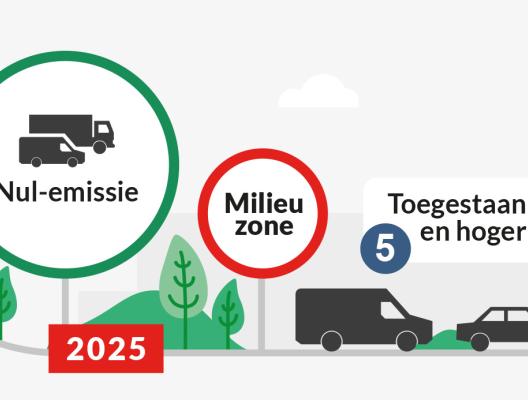
Zero-emission zones and what they mean for your business
In 2025, zero-emission zones are coming into force in the Netherlands. This means certain cities will only allow vehicles with no emissions. Businesses currently using diesel or petrol vehicles need to prepare for the switch to zero-emission vehicles so they can keep delivering within city limits.
Leasing through SuperShortlease.nl: a smart solution
If you don’t want to invest in new vehicles straight away, SuperShortlease.nl offers the ideal solution. We offer flexible lease contracts for fully electric vehicles that meet the requirements of the zero-emission zones. So you can keep your business running without big financial investments or hassle.
The benefits of leasing through SuperShortlease.nl
- Flexible lease options: whether you want to lease temporarily or for longer, we offer contracts that suit your needs.
- Zero-emission driving: our vehicles are fully electric, so you have access to all zero-emission zones without worrying about permits or fines.
- No big investments: instead of investing heavily in new vehicles, you simply lease a vehicle that fully meets environmental standards.
- Smooth transition: thanks to our short lease periods, you can switch quickly and you’re guaranteed a vehicle that’s always up to date.
How does leasing through SuperShortlease.nl work?
- Choose your vehicle: check out our range of zero-emission vehicles suitable for your business.
- Put together your lease contract: choose the lease period that suits your situation. Whether you want to lease for a few months or longer, we offer flexible options.
- Get started straight away: once the lease contract is signed, you can start using your new zero-emission car right away, so you’re ready for the zero-emission zones.
Why SuperShortlease.nl?
At SuperShortlease.nl, we don’t just offer flexible leasing – we also give you the certainty that your vehicle fully meets the zero-emission standards. That gives you the peace of mind you need, so you can focus on running your business.
Take action today
Don’t wait until 2025 to adapt to the new rules. Lease a zero-emission vehicle through SuperShortlease.nl now and make sure your business is ready for the zero-emission zones. Get in touch and discover the options!
Need help?
Our team is happy to help. Send us a WhatsApp, give us a call or drop us an email, or find the answer straight away in our FAQs.
WhatsApp us
+31 6 29518248
Call us
+31 88 996 0100
Email us
A quick answer to your question
FAQs
Read the answers
Related articles
Compare our competitive deals
- Flexible from 1 month
- Personal service, sorted quickly
- Switch to electric with ease
Questions about short lease? Gideon is happy to help you get started!
We are happy to work with you to find a suitable short lease solution.
Brands
A selection of our brands
We supply all brands and all classes of passenger cars and commercial vehicles. Whether you are looking for a BMW, Audi, Tesla or Volvo.
Kia
Renault
Volkswagen
BMW
Skoda
Volvo
Categories
SUV
Hatchback
Estate
Van
Saloon
Minibus
SUV
Hatchback
Estate
Van
Saloon
Minibus
SUV
Hatchback
Estate
Van
Saloon
Minibus
The future of shortlease

Contents
About the author
Growing demand for flexibility
Today's consumers value flexibility more and more. Traditional lease contracts with long terms no longer match the needs of drivers who want to switch vehicles more often or only need a car for a shorter period. Shortlease ties in perfectly with this, and that's only expected to grow. Businesses and individuals will increasingly choose shortlease as a way to save costs and adapt to their changing mobility needs.
Sustainability and the environment
Sustainability is an increasingly important topic in the car ownership and leasing market. In future, shortlease providers are likely to focus more on offering electric and hybrid vehicles. Consumers are more and more aware of their carbon footprint, and shortlease can help them drive greener without tying themselves to long-term contracts. Bringing green technology into shortlease won't just make it more appealing; it'll also help build a better future for our planet.
Technological innovation
The rise of technology is having a big impact on the way we lease vehicles. In future, we're likely to make more use of digital platforms and apps for shortlease. Customers will be able to book vehicles, manage their contracts and even track their journeys with advanced technology. These innovations make for a user-friendly experience and can make shortlease providers more efficient.
Changing mobility trends
The future of shortlease will also be shaped by wider mobility trends, such as car sharing and multimodal transport. People increasingly want to choose the most efficient way to travel, and shortlease can be a valuable addition to other forms of mobility. By combining shortlease with car sharing and public transport, drivers can get the most out of their journeys and save costs.
A promising future
In short, the future of shortlease looks promising. With growing demand for flexibility, the focus on sustainability, technological innovation and changing mobility trends, shortlease offers an attractive solution for modern mobility needs. Whether you're a business looking for a cost-effective way to manage your fleet or an individual who needs a reliable car without long-term commitments, shortlease will keep playing an important role in the future of mobility.
Need help?
Our team is happy to help. Send us a WhatsApp, give us a call or drop us an email, or find the answer straight away in our FAQs.
WhatsApp us
+31 6 29518248
Call us
+31 88 996 0100
Email us
A quick answer to your question
FAQs
Read the answers
Related articles
Compare our competitive deals
- Flexible from 1 month
- Personal service, sorted quickly
- Switch to electric with ease
Questions about short lease? Gideon is happy to help you get started!
We are happy to work with you to find a suitable short lease solution.
Brands
A selection of our brands
We supply all brands and all classes of passenger cars and commercial vehicles. Whether you are looking for a BMW, Audi, Tesla or Volvo.
Kia
Renault
Volkswagen
BMW
Skoda
Volvo
Categories
SUV
Hatchback
Estate
Van
Saloon
Minibus
SUV
Hatchback
Estate
Van
Saloon
Minibus
SUV
Hatchback
Estate
Van
Saloon
Minibus
Road trip through France in a Volvo EX30
Contents
About the author
Ronald says:
"In April I picked up the keys to a Volvo EX30 Extended Range Plus that I get to call ‘mine’ for the next few months. In May I took this car on a two-week trip around Europe. A journey of just under 3,000 kilometres with a few stopovers along the way, and Monaco as the main destination to watch the Formula 1 Grand Prix (a real dream destination for me). We drove from my home town to Nancy in France, a lively student city where we stayed for two nights. Then on to Lyon, the gastronomic heart of France, where we spent three days before driving on to Nice, the furthest point of our road trip. From there we took the train to the circuit, because driving there just isn't doable, at least not for mere mortals like me.
Our travel plan
My partner and I have been on holiday in an electric car before, to Austria that time. We did that drive at a faster pace than this time, and that went fine too. Germany has a good density of fast chargers along its motorways. This time the plan was to visit a few places along the route, enjoy a couple of days in each and gradually work our way further south.

Planning the route
To plan the trip we use the Chargemap app. In this app you can enter which car you drive, the charge percentage you're setting off with and the minimum battery percentage you want left when you arrive at your destination. We always went for around thirty per cent, so you've still got some left for unexpected trips. You can also set which providers you want to fast-charge with. I chose to go with the well-known providers (set to prefer Fastned, TotalEnergies, Engie, Shell Recharge and Ionity). From the app you can send your route to Google Maps. And, more specifically in the case of this Volvo, to the car's navigation (also Google Maps).
And off we go...
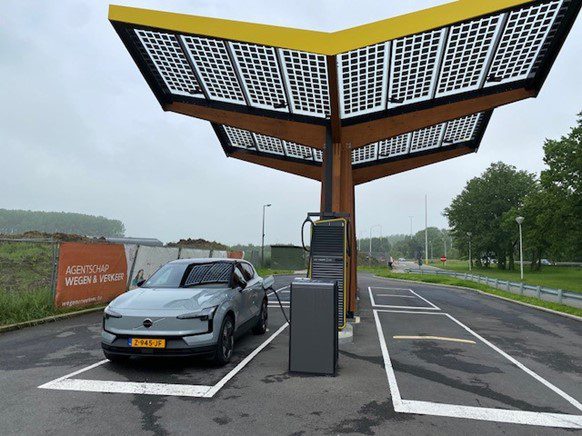
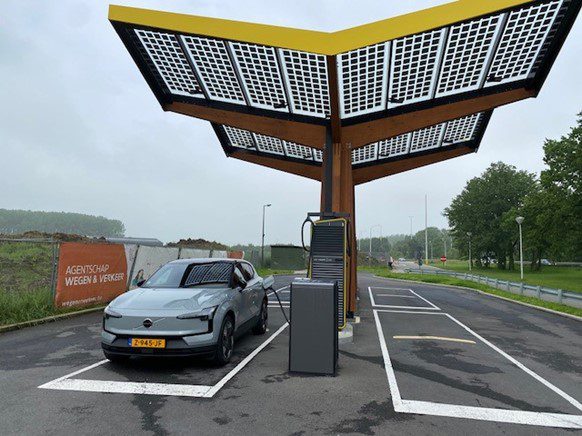
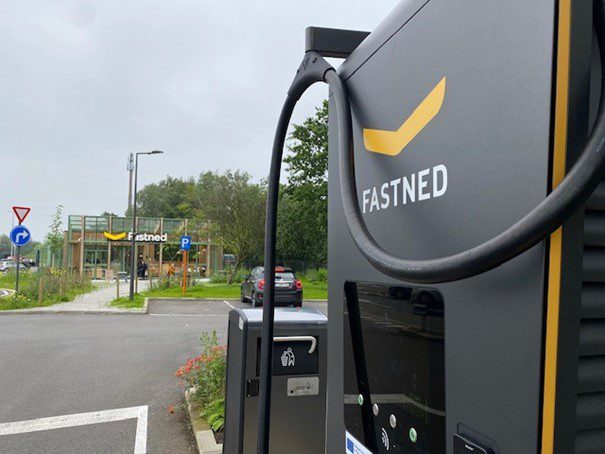
We set off with the battery at 100%, and we planned the first charging stop on the way to Nancy in Belgium, at Fastned. Charging went fine. At the start it was below the maximum charging power of just over 150 kW, but we were still at 50%, and the charging speed already drops a bit by then. At most charging stops we chose to charge from about 10% to about 80%, and that always took just under half an hour. Compared with filling up it sounds like a lot, but it actually flies by. A trip to the loo, a quick coffee and a sandwich or a snack, and you're ready to go again. I find these compulsory breaks make for a really relaxed way of travelling. The downside of the charging station at our first stop: no toilet, coffee or sandwiches. Nothing at all. So much for that theory…
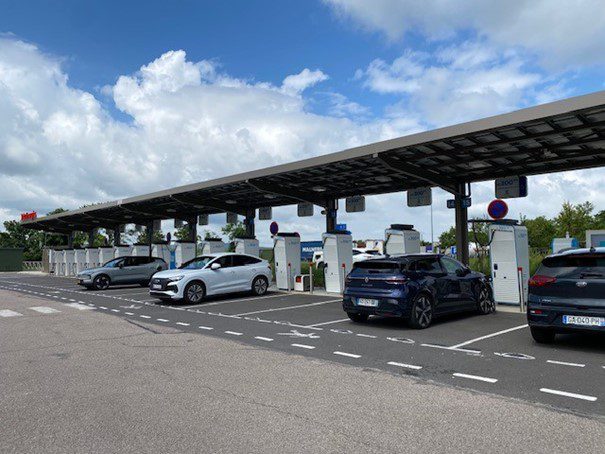
On to the next one. A charging station in France at a large petrol station and rest area, so luckily all the facilities were there. Finally, that sandwich! Charging went as fast as the car could handle, so it was all smooth sailing.
Charge card
As my charge card I use a Multitankcard EU charge card through SuperShortlease/Rebel Lease, and it worked without any problems along the French motorways. Just to be safe, I also brought along cards from Shell Recharge and Engie.
After a short half hour, on to Nancy. Ideally you'd plug in at your hotel's charging point so you can set off again with a full battery after your stay, but we weren't able to charge at any of our hotels on this trip. That means you don't set off with a 100% battery and you have to plan your first charging stop fairly soon.
After a few relaxing days in Nancy, we get back in the car and plan the next charging stop. At every stop we planned the next one afresh in Chargemap, so you're always working with the latest info on charging stations, availability and traffic. Sent to the car at the touch of a button; that just works really easily in this Volvo.
The next stop is Lyon, and at only 400 kilometres that's perfectly doable, but because we didn't set off with a full battery we still have to charge once. Again it all goes smoothly, with plenty of space. The next leg of just under 500 kilometres to Nice went well too. The longer you're on the road, the better you understand the consumption, and the more confidently you let the battery run down a bit further. And always plenty of space, although we're still outside peak season.
Through Italy and Switzerland to Alsace
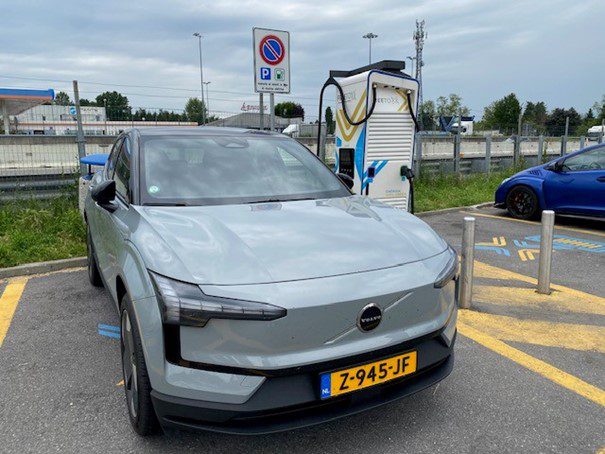
After a fantastic weekend at the Formula 1 in Monaco, it was time to drive on. The next destination was Colmar in Alsace, a drive of around 750 kilometres through France, Italy and Switzerland. Charging options are said to be less good in Italy, but here too we could use a well-known provider. We could also charge without any problems at an Italian provider with the MTC card. We didn't come across the large numbers of fast chargers you see in France anywhere in Italy, though. So I can imagine it might get busy at the chargers in peak season.
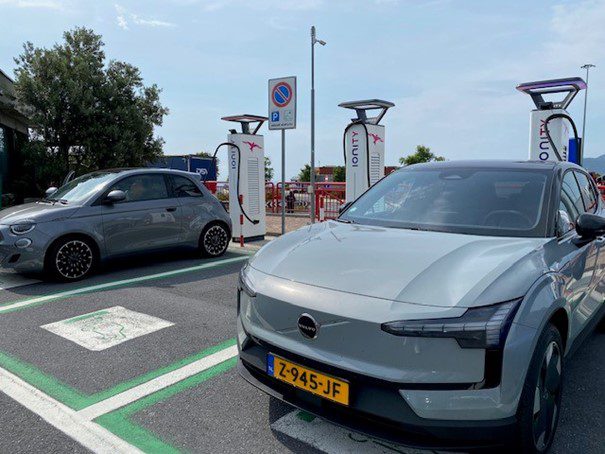
After Italy, through Switzerland, with another charging stop there. In France I'd noticed that you can actually use pretty much every fast charger without a charge card and pay by credit card (and sometimes even with your Dutch debit card). Luckily that was possible in Switzerland too, because the charging station we'd picked (from a local provider) wouldn't accept the charge card, and the charger didn't make a peep with the ‘backup’ cards either. So we used the credit card instead, and luckily that worked. It's a bit of a faff, though, because you have to create an account via a QR code before you can charge. At many fast chargers in the Netherlands and France, among others, you can simply pay contactless with your bank card and charging starts. From now on, it's back to an international provider. After a tasty burger, we were charged up after all and drove on to Colmar.
From Colmar we headed towards Disneyland Paris and from there on home. On the way back we stopped again in Belgium at a Fastned charging point, and this station was much more developed than the one on the way out, with good facilities. Basically just like a big petrol station, but without the petrol pumps.
Road-tripping in an electric car... is it doable?
After a lovely loop through part of Europe, I can conclude that driving electric works well on a longer trip too. You're forced to travel at a more relaxed pace, and I like that. Planning each stop properly and carrying a credit card ‘just in case’ is a good idea. It's not about racking up the kilometres at high speed, but in my situation that was no problem at all for this trip. Besides, I just find an electric car really smooth and comfortable to drive, and that's why I'll keep driving electric. The still slightly lower benefit in kind is a nice bonus too, but it's no longer the deciding factor.
Happy with the EX30?
And the Volvo? I've been able to test the EX30 thoroughly over the past few weeks. It's a very comfortable drive, very quiet and plenty powerful. A compact Volvo with the qualities of a big one; I've become a fan! The software could still do with an update, but that's being installed any day now. That should fix most of the bugs. Then I'm all set for the next road trip."
Need help?
Our team is happy to help. Send us a WhatsApp, give us a call or drop us an email, or find the answer straight away in our FAQs.
WhatsApp us
+31 6 29518248
Call us
+31 88 996 0100
Email us
A quick answer to your question
FAQs
Read the answers
Related articles
Compare our competitive deals
- Flexible from 1 month
- Personal service, sorted quickly
- Switch to electric with ease
Questions about short lease? Gideon is happy to help you get started!
We are happy to work with you to find a suitable short lease solution.
Brands
A selection of our brands
We supply all brands and all classes of passenger cars and commercial vehicles. Whether you are looking for a BMW, Audi, Tesla or Volvo.
Kia
Renault
Volkswagen
BMW
Skoda
Volvo
Categories
SUV
Hatchback
Estate
Van
Saloon
Minibus
SUV
Hatchback
Estate
Van
Saloon
Minibus
SUV
Hatchback
Estate
Van
Saloon
Minibus
How do you charge an electric car?
Index
About the author
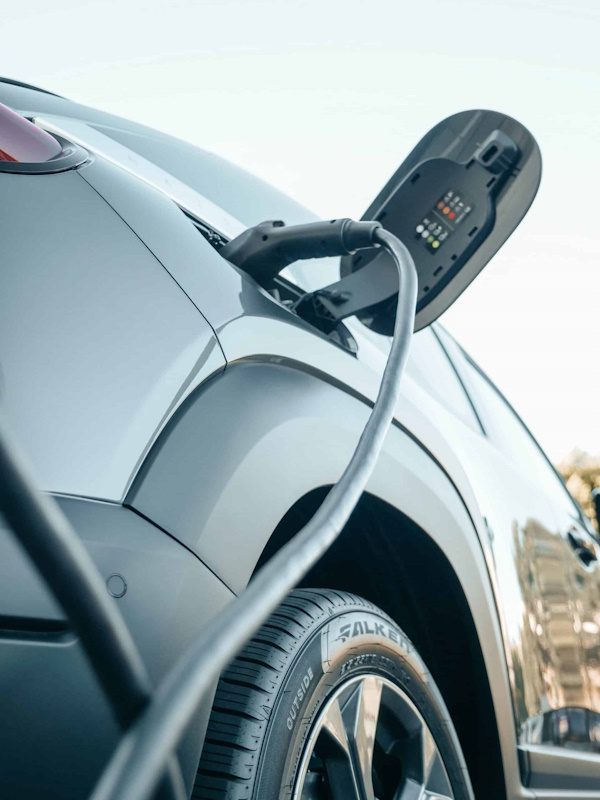
You no longer fill up your electric short lease car with gasoline. Instead, its battery needs to be charged. There are large rechargeable batteries in it, which you have to supply with energy. You can charge the car at home or on the road. You do this through a charging station or a quick charger. You can even charge through a normal outlet, but that takes a very long time. Via a charging station is faster, easier and safer.
Tips for charging on the road
Public charging stations can be found at gas stations, parking lots and residential areas, among other places. You can use a “regular” charging station or a fast charger.
Fast charging your electric car
You can also go to a (public) fast charger. These are increasingly common along highways. Look carefully at the maximum charging speed of your car and that of the charging station. Fast charging is slightly more expensive than charging in, say, a residential area, but within 20-30 minutes your battery can be 80% charged.

Charging your electric car at home
You can also (have) a charging station installed at home. This is connected directly to your own power network. You do not need a subscription. The charging costs depend on the electricity rate in your energy contract. Tip: if you charge during off-peak hours, this can save you money!
Charging at home often takes a little longer, because public charging stations have a higher charging capacity. But get home and don’t need to leave for the next few hours? Then of course it is very convenient to have your car charged in the meantime while parked at home.
What do you need to charge the battery?
To charge your electric car, you need a charging cable and a charging pass to use public charging stations.
Cables
Supershortlease delivers the electric car including the appropriate charging cables. You can usually find these in the trunk. With the charging cable you connect the battery of the electric shortlease car to a charging point.
Charge Card
With a charging card, you can use public charging stations. You connect the car with the charging cable to the charging station. As soon as you scan the charging card, the charging station “turns on”. The charging station now knows which car is being charged and who will pay the electricity bill. You pay for the number of kilowatt-hours (kWh) you purchase. At Supershortlease we arrange a Multitankcard charge card for you. For the use of the card you pay € 10.00 administration fee per month.
Need help?
Our team is happy to help. Send us a WhatsApp, give us a call or drop us an email, or find the answer straight away in our FAQs.
WhatsApp us
+31 6 29518248
Call us
+31 88 996 0100
Email us
A quick answer to your question
FAQs
Read the answers
Related articles
Compare our competitive deals
- Flexible from 1 month
- Personal service, sorted quickly
- Switch to electric with ease
Questions about short lease? Gideon is happy to help you get started!
We are happy to work with you to find a suitable short lease solution.
Brands
A selection of our brands
We supply all brands and all classes of passenger cars and commercial vehicles. Whether you are looking for a BMW, Audi, Tesla or Volvo.
Kia
Renault
Volkswagen
BMW
Skoda
Volvo
Categories
SUV
Hatchback
Estate
Van
Saloon
Minibus
SUV
Hatchback
Estate
Van
Saloon
Minibus
SUV
Hatchback
Estate
Van
Saloon
Minibus
Diesel, petrol or electric after all?
Almost 30 per cent of respondents even think that in 25 years, electric driving will dominate over driving on diesel or petrol. Only five per cent of Dutch people see petrol or diesel as the most future-proof fuel. Most Dutch people think petrol and diesel will slowly disappear from our streets.
Policies against diesel
It'll probably be a few more years before this prospect becomes reality. In the meantime, though, demand is already shifting steadily from diesel towards petrol and electric. Policies discouraging diesel are a major reason for this. Local authorities are setting up low-emission zones where diesel cars are no longer welcome. Many people are afraid they'll soon no longer be able to drive their car into the big cities.
Break-even point
High road tax plays a part too. In the past, you could recoup the extra costs fairly quickly through much lower fuel consumption and the lower price of diesel. But these days petrol cars are becoming more and more economical too, which pushes the break-even point further away. For small cars it can be as much as almost 50,000 kilometres a year. At the same time, reports about manufacturers' ‘cheat software’ have led to negative sentiment around diesel.
Finally, fewer than five per cent of respondents say they never want to switch to electric. On average, the psychological barrier is a range of at least 500 kilometres without recharging. With modern developments in bigger batteries and faster charging times, a large group is already giving in sooner. HuurMij Mobiliteit – the parent company of SuperShortlease and Rebel Lease – has just invested in a number of Hyundai IONIQs for lease and shortlease. Fully electric vehicles with a 4% benefit in kind, letting companies show their social responsibility while also keeping costs for the driver in check.
Curious where the break-even point between diesel and petrol lies in your own situation? Take the test at www.omslagpunt.com
Need help?
Our team is happy to help. Send us a WhatsApp, give us a call or drop us an email, or find the answer straight away in our FAQs.
WhatsApp us
+31 6 29518248
Call us
+31 88 996 0100
Email us
A quick answer to your question
FAQs
Read the answers
Related articles
Compare our competitive deals
- Flexible from 1 month
- Personal service, sorted quickly
- Switch to electric with ease
Questions about short lease? Gideon is happy to help you get started!
We are happy to work with you to find a suitable short lease solution.
Brands
A selection of our brands
We supply all brands and all classes of passenger cars and commercial vehicles. Whether you are looking for a BMW, Audi, Tesla or Volvo.
Kia
Renault
Volkswagen
BMW
Skoda
Volvo
Categories
SUV
Hatchback
Estate
Van
Saloon
Minibus
SUV
Hatchback
Estate
Van
Saloon
Minibus
SUV
Hatchback
Estate
Van
Saloon
Minibus